Wednesday, 18 March 2015

Flies

FLIES


Did You Know ???

  • There are approximately 120,000 species of flies that have been described by science. 
  • In middle of the 20th century, doctors in battle and war zones used MAGGOTs (larvae ) of the lucilia blowflies to heal the wounds of soldiers who were injured.
  • The maggots helped to clear infections when they are placed directly in the wounds.
  • The adult housefly can live up to one month in the wild.
Types Of Flies

 Includes :
  •      Blow flies
  •      Black fly
  •      Bottle flies
  •      Drain fly
  •      Fruit fly
  •      GNAT
  •      House fly
  •      Horn fly
  •      Sand fly
  •      Yellow fly
 
Blow Fly  

Identification
  • It is in metallic in appearance, with feathery hairs on the terminal antennal segments of the males.

Diet 
  • Most blow fly larvae feed in carrion or other decaying organic matter.
  • Blow flies are attracted to decaying meat and are typically the first organisms to come into contact with dead animals.
  • The meat of dead animals is essential for larval survival and growth.

Predators
  • Spider
  • Beetles
  • Frogs
  • Chickens
Disease
  • Adults may be vectors of pathogens of diseases such as dysentery.
  • Flies, most commonly Calliphoridae, have frequently been associated with disease transmission in humans and animals, as well as myiasis .

Bottle fly

Identification
  • Bottle flies, also called blow flies, are common, large flies known for their metallic blue or green color.

Diet
  • Feed on dog feces, exposed food and decomposing plants or animals. 
  • Larvae feed on decaying animal flesh and need rotting meat to complete their development.

Predators
  • Spider
  • Beetles
  • Frogs
  • Chickens
Disease
  • Potential and threatening diseases include rabbit haemorrhagic disease.
  • These maggots are a major source of this skin invasion, causing lesions.
House fly
Identification
  • Usually gray, less than 4 to 7.5 mm long with four black stripes on the thorax.
Diet
  • Wide variety of food, including human food, animal food and carcasses, garbage and excrement.
Predators
  • Spider
  • Beetles
  • Frogs
  • Chickens
Disease
  • Recognized as carriers of easily communicable diseases. 
  • Flies collect pathogens on their legs and mouths when females lay eggs on decomposing organic matter such as feces, garbage and animal corpses. 
 Overall

Where do flies breed and lay eggs ?
  • Filth flies include the common house fly, drain flies and blow flies. 
  • Depending on species, they may seek moist, dark piles of trash, rotting carcasses or manure in which to lay their eggs. 
  • Fruit flies, as their name implies, are fond of overripe fruit or other sugary substances.

How does the disease spread ?
  • House flies carry diseases on their legs and the small hairs that cover their bodies. 
  • It takes only a matter of seconds for them to transfer these pathogens to food or touched surfaces. 
  • Mature house flies also use saliva to liquefy solid food before feeding on it. During this process, they transfer the pathogens first collected by landing on offal.

Disease caused by flies 
  • typhoid
  • cholera
  • dysentery
  • salmonella
  • anthrax
  • tuberculosis

How to prevent from infected ?

Cleaning away fly attractants
  1. Clean the kitchen thoroughly
  2. Keep compost buckets covered.
  3. Keep pet food covered or remove uneaten pet food.
  4. Keep all bins covered.

Life Cycle of Flies


Body Parts of Flies


YouTube

                                                                     
 THE END


Tuesday, 3 March 2015

" Bomb " in toilets because of a cockroach !!

31 January 2015

TAIPEI - TAIWAN. Attributable to a cockroach, a worker at a cleaning company reported a cockroach blew up the entire bathroom in his office recently.

Citing reports from news portals Metro.co.uk, the incident occurred when the woman who wants to kill a cockroach, but inadvertently produced a homemade bomb with a detergent chemicals stored in the toilet.

According to the report, the woman firstly took step by hitting cockroach using his shoe to make sure the cockroach is really dead. Then, the cockroach is wrapped with a tissue paper before 'be destructed' before burnt.

"She threw the cockroaches into the toilet and forgot to pull the toilet pump. The tissue which mixed with the chemicals used to clean the toilet exploded not long after that and produces a huge sound that shocked the entire office.


Cockroaches said to be among the insects that have a high level of survival.This insect is said to still be alive in a few weeks though his head cut off .


References

http://www.sinarharian.com.my/global/bom-tandas-gara-gara-seekor-lipas-1.355914


Monday, 23 February 2015

2 .Rodents


Problems 

  • Spread serious diseases
  • Carry fleas,
  • Consume or contaminate
  • Gnaw
  • Cause a great deal of anxiety

Commensal Rodents
There are three basic type of rodents :

  1. Norway rat ( rattus norvegious )
  2. Roof rat ( rattus rattus )
  3. House mice (mus muscular )


  • Destroy & contaminate structure as well as harm young birds and chicks.
  • Undesirable in feed and seed stores because destroy the seed, corn.

Bionomic Factor

Vision 

  • Night vision(can see only in night)

Smelling Organ 

  • Leave its urine all the way it goes

Hearing 

  • Afraid of high level noise.
  • Detect sound up to look 

Sensory organ

  • Long mustache and other fine hairs on their body

Taste

  • Good tasting
  • Can differentiate the food.


1. Norway ( Rattus Norvegious ) 
Habitat 

  • Norway rats live in close association with people.
  • Although they can climb, Norway rats tend to inhabit the lower floors of multistory buildings.
  • Found in building foundation.

Food Habits

  • Will eat nearly any type of food.
  • They prefer cereal grains, meats and fish, nuts, and some types of fruit.

General Biological and Reproductive

  • Rats have poor eyesight
  • Their hearing and their excellent senses of smell, taste, and touch
  • Litters of 6 to 12 young are born 21 to 23 days after conception.
  • They become completely independent at about 3 to 4 weeks and reach Reproductive maturity at 3 months of age.


 2.Roof Rat ( Rattus Rattus )

Habitat

  • They have been found in swimming pools, laundry rooms, attics, garages, and patios.
  • They’ve been seen on power lines in the alleys.
  • Roof rats are strongly arboreal (tree inhabitants) and travel along power lines to trees, oleanders, vines, and roofs.

Food Habitat
  • All types of citrus and other fruits, and nuts.
  • Bird seed (both in feeders and stored in bags)
  • Dog and cat food (left outside after dark are favorites)
General biology
  • Young are born in a nest about 21 to 23 days after conception.
  • The number of litters depends on the area and varies with nearness to the limit of their climatic range.
  • The young may continue to nurse until 4 or 5 weeks old.
Common sign :

  • Visual sightings on power lines, trees, bushes, patios, roofs.
  • Hollowed citrus and other fruit.
  • Rat droppings.
  • Noises in the attic and walls.


House mice ( Mus Musculus )

Habitat
  • They can live in forests, grasslands and manmade structures easily.
  •  Mice typically make a burrow underground if they live out in the wild.
  •  Their burrow helps protect them from predators.
Food Habitat
  •  they like to eat fruits, seeds and grains.
  • they eat both plants and meat, and the common house mice will eat just about anything it can find.
General Biology
  • The pups are born blind and without fur or ears.
  •  The ears are fully developed by the fourth day,fur begins to appear at about six days and the eyes open around 13 days after birth,the pups are weaned at around 21 days. 


THE END


Tuesday, 3 February 2015

1. Cockroaches

Did u know ?
       A cockroach can live for up to one week without his head.
             
           A cockroach can live almost a month without food.

         A cockroach can live about two weeks without water.

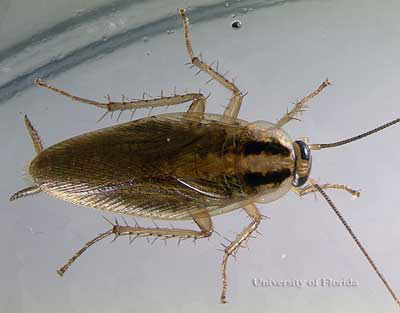
There are 3 main species of cockroaches which is well known as pest :

  • German cockroach
  • American cockroach
  • Oriental cockroach

Cockroaches Life-Cycle


Actually there are three stages of cockroach developmental.Known as :

  •  the egg
  •  the nymph 
  •   and the adult
  1. The lifecycle of cockroach starts in an egg that is put into 40 eggs at a time.
  2. It carries the case around with them until the eggs are ready to hatch.
  3. Lifecycle of cockroach gets more exciting when the eggs hatch.
  4. the young cockroaches are very small and known as nymphs.
  5. body of the nymphs will be quite soft and white.
  6. When molting process is completed the cockroach will get bigger, change in color, and look more like an adult cockroach.  
  7. When the cockroach reaches its adult size it will not molt again. 
  8. Many types of cockroaches will complete their transformation into adulthood with a pair of wings.Young adults may look almost exactly like a nymph, with the wings being the one characteristic that easily sets the two apart.


LIFE CYCLE

AMERICAN COCKROACH

  • It is the biggest of the common cockroaches that you will find in your home.
  • they are reddish brown in color and they have a yellow band.


Diet
** American roach will eat just about anything, including plants or other insects.


Habitat


  • These cockroaches prefer to live near warm , dark, wet areas.
  • Although they are found in houses,they are also common in restaurants, grocery, and etc.


Impact


  • They crawl through dirty areas and bring lots of bacteria and germs.
  • They can contaminate food by shedding their skin.
  • It causes allergic, asthma and other illness.


GERMAN COCKROACH

  • It can found all over the place.
  • Each German cockroach can live about 100-200 days.


Diet

** Cockroaches are attracted to sweet and floury foods. They also eat non-organic items such as toothpaste and books.


Habitat

  • live in warm and damp places.
  • such as: kitchen, bathrooms, and etc.


Impact

  • They crawl through dirty areas and bring lots of bacteria and germs.
  • They can contaminate food by shedding their skin.
  • It causes allergic, asthma and other illness.


ORIENTED COCKROACH

  • They are large and very dark compared to other cockroaches.
  • They prefer dirty places and cooler temperatures than other cockroaches.


Diet

** feed on all types of garbage and other organic material.


Habitat

Oriental cockroaches also live in sewers and wet, decaying areas

Such as:basements and crawlspaces, firewood and piles of leaves.


Impact

  • They crawl through dirty areas and bring lots of bacteria and germs.
  • They can contaminate food by shedding their skin.
  • It causes allergic, asthma and other illness.


How to get rid of Cockroaches

  • Find the infestation.
  • Eliminate Harbourage.
  • Eliminate food and water source.
  • Cockroach treatment.

YouTube
**(Cockroaches laying egg and hatching)**


THE END


Monday, 26 January 2015

Introduction To Vector & Pest Management

What is Vector ?

VECTOR
**Direct damage that they may cause by feeding or biting.
for eg:organism that transmit infection to human.
Included: Mosquitoes, Cockroaches, Flies, Fleas and Ticks.
It can be also describe as a organism that carries bacteria or viruses with it.

What is Pest ?

PEST
**An animal or insects which causes trouble for human.
Included: Rodents,Flies,Cockroaches,Bacteria and Fungi.
Pest is more to be themselves a problem.

Methods of Vector and Pest Control

such as:              

  • reduce areas where vector can easily breed.
  • reducing direct contact with animals which can cause problems.
  • pesticides can be used to control the vectors.
  • to avoid pollution,we can use natural vector predator.


Rodents

Flies

Fleas


What is IPM ?
** IPM is a sustainable approach to managing pests by combining the use of all practical methods of pest control including biological, physical and chemical methods, in a manner that attains the client's goals while minimizing economic, health and environmental risk.

Disease of vector and pest
Intergrated pest management (IPM) techniques are needed to reduce the number of pests that threaten human health and property.
Those are : 
  • monitoring, identifying, and determining the level of threat from pests,
  • making the environment hostile to pest,
  • building the pests out by using pest - proof building materials.